



When wastewater contains high concentrations of suspended solids, oils, or floating debris, conventional settling tanks often struggle to achieve the separation needed for effective treatment. This is where dissolved air flotation systems have earned their reputation as workhorses in industrial and municipal wastewater operations. By generating a field of tiny air bubbles that attach to contaminants and carry them to the water surface, DAF systems accomplish rapid, efficient separation that keeps treatment processes running smoothly and protects downstream equipment from damage.
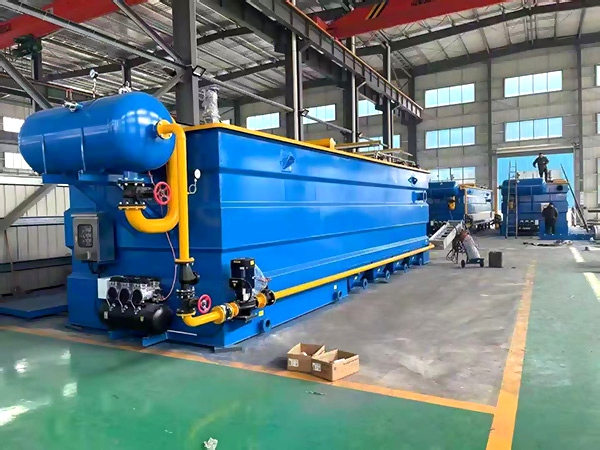
The Working Principle Behind DAF Technology
The dissolved air flotation process relies on a straightforward physical principle: air has much lower density than water, so when fine air bubbles rise through a water column, any particle or droplet they encounter gets carried upward. In a DAF system, water is pressurized and saturated with dissolved air in a retention vessel. When this pressurized stream is released into the flotation tank through a pressure reduction valve, the dissolved air comes out of solution as microscopic bubbles measuring typically 30 to 70 microns in diameter.
These microbubbles collide with suspended particles and oil droplets dispersed throughout the wastewater. Once a bubble attaches to a particle, the combined buoyancy of the bubble-particle aggregate causes it to rise rapidly to the water surface. At the surface, the accumulated floating material—called the float cake or scum—forms a relatively dry layer that a mechanical scraper or skimmer blade removes continuously or at programmed intervals.
Why DAF Units excel in Industrial Wastewater Treatment
Industrial facilities generate wastewater streams laden with fats, oils, greases, and fine suspended solids that resist conventional gravity separation. A DAF system handles these challenging streams with remarkable efficiency, often achieving 90 to 95 percent removal of dispersed oils and a substantial reduction in total suspended solids within a single treatment stage. This level of performance makes DAF an invaluable step before biological treatment processes, where high oil concentrations can inhibit microbial activity.
Food processing plants, oil refineries, chemical manufacturing facilities, and metal finishing operations all benefit from DAF technology. The systems are equally effective in municipal wastewater applications, particularly for treating stormwater runoff and raw sewage with high floating debris loads. A well-maintained DAF unit operating at a food processing plant can process several hundred cubic meters of process water per hour while producing a dry float cake that is straightforward to dispose of or further process.
Design Considerations and System Configuration
Effective DAF system performance depends on thoughtful design matched to the specific wastewater characteristics. The air-to-solids ratio—the amount of dissolved air relative to the mass of contaminants in the feed stream—governs the buoyancy available for particle attachment and is one of the most critical operating parameters. Skeletal system designers calculate this ratio based on influent total suspended solids concentration and target effluent quality, adjusting flow rates and saturation pressure accordingly.
Retention time in the flotation tank also influences treatment efficiency. Longer retention allows more complete bubble-particle attachment and gives larger aggregates time to reach the surface before being carried out with the treated effluent. Typical hydraulic retention times range from 20 to 45 minutes depending on the nature and concentration of contaminants. The tank geometry must provide uniform flow distribution across the cross-section to prevent short-circuiting, where portions of the influent stream pass through without adequate contact with rising bubbles.
Chemical Pretreatment and Performance Enhancement
While DAF technology is powerful on its own, combining it with appropriate chemical conditioning elevates treatment performance further still. Coagulants such as aluminum sulfate or ferric chloride destabilize colloidal particles, causing them to aggregate into larger, heavier flocs that attach to air bubbles more readily. Polyelectrolyte flocculants bridge between particles, building larger, stronger aggregates that rise to the surface more efficiently and produce a drier float cake.
Suppliers offering DAF equipment with integrated chemical dosing systems provide a coordinated approach that simplifies operation and optimizes treatment results. The dosing pumps, mixing chambers, and control valves work in tandem with the flotation tank to maintain consistent performance even when influent quality fluctuates throughout the day—a common scenario in batch-style industrial processes.
Selecting the Right DAF Equipment Supplier
Buyers evaluating DAF systems should look beyond headline specifications to assess the engineering quality and support infrastructure behind the equipment. A reputable manufacturer conducts jar tests or pilot trials with samples of the actual wastewater to be treated, using the results to size the system correctly and optimize operating parameters before delivery. Undersized DAF units cause chronic performance problems that cannot be resolved through operational tweaking alone.
The construction materials used in the tank and internal components affect longevity and maintenance requirements. Stainless steel tanks resist corrosion in aggressive wastewater streams, while appropriately specified polymer internals offer excellent chemical resistance and low friction surfaces that minimize scaling and fouling. A manufacturer who listens carefully to the wastewater characterization data and asks probing questions about operating conditions demonstrates the engineering discipline that leads to successful installations.
Conclusion
Dissolved air flotation systems deliver fast, efficient removal of floating contaminants and suspended solids across a wide range of industrial and municipal applications. Their compact footprint, high treatment efficiency, and compatibility with chemical conditioning make them a preferred choice for facilities seeking reliable pretreatment before biological processes or final effluent polishing. Sourcing from an experienced manufacturer ensures properly sized equipment and ongoing technical support that keeps the DAF system performing at its best throughout years of operation.
References
Edzwald, J.K. – Water Quality & Treatment: A Handbook of Community Water Supplies, 6th Edition, McGraw-Hill.
U.S. Environmental Protection Agency (EPA) – Guidance Document on DAF (Dissolved Air Flotation) for Treatment of Industrial Wastewaters.
Journal of Environmental Chemical Engineering, Vol. 9, No. 4, 2021 – Optimization of Dissolved Air Flotation Performance in Industrial Wastewater Treatment.
Water Research Foundation – Best Practices for Dissolved Air Flotation in Water and Wastewater Treatment, Technical Report.