



Dissolved air flotation has established itself as one of the most versatile and reliable unit operations available for industrial wastewater treatment, and for good reason. Across sectors as diverse as food processing, petrochemicals, metal finishing, and municipal water utilities, DAF systems consistently deliver high removal rates for the contaminants that matter most—floating oils, emulsified greases, and suspended particulate matter. Understanding why this technology has become so widely adopted helps facility managers and environmental engineers make better decisions about treatment system design and supplier selection.
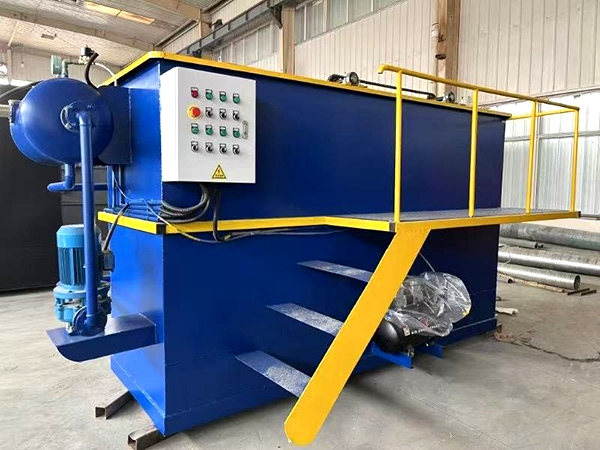
High Efficiency Removal of Floating Contaminants
The fundamental advantage of dissolved air flotation is its ability to remove substances that float rather than sink. Conventional gravity sedimentation relies on particles being denser than water, but many industrial wastewater pollutants are buoyant—oil droplets, grease globules, and lightweight organic debris all tend to rise rather than settle. DAF overcomes this limitation by generating fine air bubbles that adhere to these floating particles and carry them forcefully to the surface against the natural buoyancy of the water itself.
The size of the air bubbles generated in a DAF system—typically 30 to 70 microns in diameter—proves particularly effective for particle attachment. Bubbles smaller than this range lack sufficient buoyancy to overcome the surface tension holding small particles in suspension, while larger bubbles pass through the water column too quickly to achieve reliable particle contact. The bubble-particle aggregates formed rise at speeds of several meters per hour, clearing the water column and concentrating at the surface where mechanical scrapers remove them as a dry float cake.
Compact Footprint for Space-Constrained Facilities
Industrial sites often face significant space constraints, whether located within dense urban industrial zones, on offshore platforms, or aboard mobile treatment units. DAF systems achieve high treatment capacity per unit area of floor space, making them particularly attractive for facilities where land or building area is at a premium. A DAF tank occupying perhaps 15 to 25 square meters can process hundreds of cubic meters of wastewater per day, delivering treatment efficiency that would require a sedimentation tank several times larger to match.
This compactness extends to the modular nature of many DAF installations, which can be expanded by adding additional treatment modules as production grows or discharge limits tighten. For a factory planning future capacity expansion, a modular DAF approach provides scalability without the need to decommission and replace existing treatment infrastructure. A manufacturer who offers modular and scalable designs helps clients plan investments that grow with their business rather than becoming obsolete as treatment requirements evolve.
Consistent Performance Across Variable Operating Conditions
Industrial wastewater streams rarely arrive at the treatment plant with consistent quality. Production schedules, batch processing cycles, and seasonal changes all introduce variation in flow rate, contaminant concentration, and wastewater temperature. DAF systems handle this variability with greater resilience than many alternative treatment approaches, particularly when the system is sized with appropriate hydraulic buffers and equipped with flow measurement and feedback control systems.
The retention time in a DAF tank—the period during which bubbles rise and particles float to the surface—provides a natural smoothing effect that dampens the impact of short-term fluctuations in feed quality. Even when contaminant spikes occur, the DAF system continues operating, with operators adjusting chemical dosing rates to match changing conditions. This operational stability reduces the risk of upsets passing through to downstream biological treatment stages that are far more sensitive to shock loads and toxic conditions.
Excellent Pretreatment for Biological Processes
Many industrial wastewater treatment strategies combine DAF as a pretreatment stage ahead of biological processes such as activated sludge or membrane bioreactors. The reason is straightforward: biological treatment systems perform best when the influent has been freed from high concentrations of oils, greases, and coarse suspended solids. These materials coat bacterial flocs, clog aeration diffuser membranes, and consume oxygen that should otherwise be available for metabolizing the dissolved organic compounds that biological treatment handles most effectively.
When DAF is used as pretreatment, it typically removes 85 to 95 percent of free oils and dispersed greases, along with a substantial fraction of the total suspended solids load. The reduced contaminant load reaching the biological reactor translates directly into smaller aeration tank volumes, lower oxygen demand, and more stable biological process performance. A downstream biological stage that receives properly pretreated feedwater can operate at higher organic loading rates without becoming overloaded, maximizing the utilization of available reactor volume.
Chemical Conditioning Synergies
The performance of a DAF system improves further when combined with appropriate chemical conditioning. Coagulants and flocculants—the same reagents used in water treatment and sludge conditioning—dramatically enhance the removal of fine suspended particles and colloidal material that would otherwise pass through the DAF system or remain in the water column as submicron droplets. By bridging between particles and creating larger, more buoyant aggregates, well-selected flocculants turn marginal removals into reliable, high-efficiency separations.
The synergy between chemical conditioning and DAF is particularly valuable for wastewaters containing emulsified oils—droplets so finely dispersed that they do not coalesce into separable free oil. Emulsified oils are invisible to the naked eye and can persist stably in wastewater for days, but they respond well to chemical destabilization followed by DAF flotation. Jar testing with actual wastewater samples identifies the optimal coagulant and flocculant combination for each specific application, and a supplier who conducts this testing as part of the design process delivers better-performing systems.
Reduced Sludge Volume and Handling Costs
The float cake removed from the surface of a DAF tank tends to be relatively dry—typically 20 to 40 percent dry solids content—because the air bubbles that carried particles to the surface also drive off some interstitial water as the cake compacts. This drier float is significantly easier and less expensive to handle, transport, and dispose of than the sludges produced by gravity sedimentation, which often contain only 1 to 5 percent dry solids. In facilities where sludge disposal costs represent a significant portion of the total wastewater treatment budget, the reduced sludge volume from DAF translates into meaningful cost savings.
For facilities considering water reuse, DAF provides an additional advantage: the float cake, composed primarily of removed oils and organic particles, is often amenable to further processing such as anaerobic digestion for biogas recovery. This organic-rich byproduct can become an energy source rather than simply a disposal expense, aligning with broader circular economy objectives that many industrial facilities are pursuing as part of their sustainability strategies.
Choosing a DAF Equipment Supplier for Industrial Applications
Selecting the right DAF equipment manufacturer requires attention to both engineering quality and practical operational considerations. The tank construction—whether fabricated from stainless steel, mild steel with protective coating, or composite materials—must be appropriate for the specific wastewater chemistry. Internal components including skimmer mechanisms, recirculation pumps, and air dissolution systems should be robust and easily accessible for routine inspection and maintenance.
A supplier who conducts wastewater characterization testing and pilot trials before finalizing equipment specifications demonstrates the engineering rigor that distinguishes well-designed systems from simple catalog sales. The availability of genuine spare parts, technical training for operators, and responsive service engineers who can attend site during commissioning and troubleshoot operational issues all add long-term value beyond the initial purchase price.
Conclusion
The benefits of dissolved air flotation for industrial wastewater treatment span efficiency, compactness, operational flexibility, and cost-effectiveness. DAF systems remove floating contaminants that conventional sedimentation cannot handle, protect downstream biological treatment from shock loads, and produce drier sludges than gravity-based alternatives. For any industrial facility seeking to improve wastewater treatment performance, reduce operating costs, and achieve reliable compliance with discharge standards, DAF technology deserves serious consideration as either a primary treatment stage or a complementary component of a multi-stage treatment train.
References
Edzwald, J.K. – Water Quality & Treatment: A Handbook of Community Water Supplies, 6th Edition, McGraw-Hill.
U.S. Environmental Protection Agency (EPA) – Technical Bulletin: Application of Dissolved Air Flotation for Industrial Wastewater Treatment.
Water Research, Vol. 172, 2020 – Optimization of Dissolved Air Flotation Performance in Industrial Wastewater Pretreatment: A Critical Review.
Environmental Progress & Sustainable Energy Journal, Vol. 40, No. 3, 2021 – DAF as Pretreatment for Biological Systems: Performance Benefits in Food Processing Wastewater Applications.